Blocky Quest: 3D Platformer
- 4.1
- Rating
- 1.00M
- Installs
- Free
- Price

 Analysis by App-foxy
Blocky Quest: 3D Platformer is the kind of adventure game that makes a strong first impression through movement alone. I found myself wanting to test one more jump, one more dash, and one more route through its chunky three-dimensional world before putting my phone down. Its basic appeal is easy to understand: explore, move quickly, and fight while navigating a large voxel-style environment. That simplicity is a strength during the first few sessions, although it also raises an important question for anyone downloading it: does the fun survive after the novelty of the blocky presentation wears off?
My answer is cautiously positive. This is a free adventure game from Bibota, aimed at players who enjoy accessible platforming with an action element rather than a slow, story-heavy journey. It is rated for Everyone, so its presentation is approachable, and it runs on Android devices using version 7.1 or later. The game has reached over a million installs, with an average rating of 4.2 from around 688 ratings. Those figures suggest that its straightforward concept connects with a substantial audience, but they do not remove the need to look closely at how it feels in ordinary use.
How the first week feels
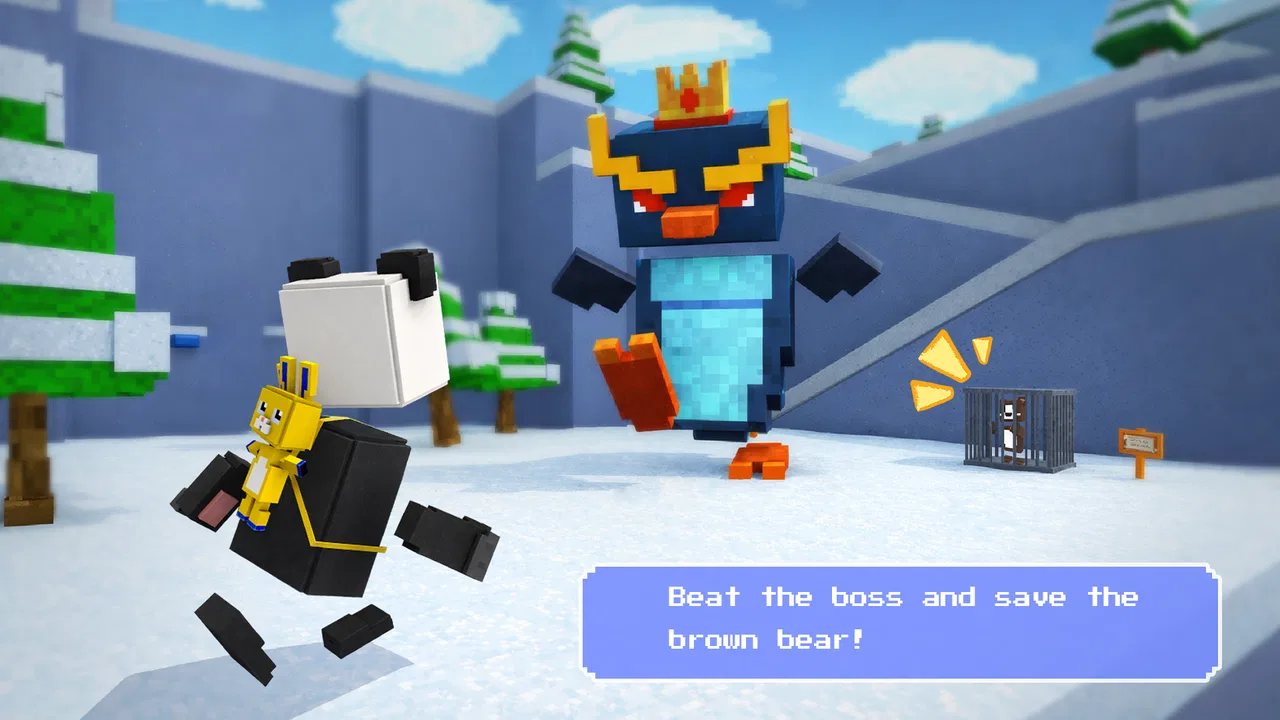
The opening appeal comes from the combination of scale and immediacy. A massive voxel world sounds like an invitation to wander, but the controls promise something more energetic than simple sightseeing. Jumping gives the game its platforming rhythm, dashing adds a sense of urgency, and fighting prevents exploration from feeling completely passive. I like that these actions support different moods: I can move carefully when judging a route, then switch to faster movement when I want the journey to feel more dramatic.
You May Also Like

 Blood Strike: 2.5 Anniversary
Blood Strike’s Loadouts Turn Every Drop Into a Tactical Gamble
A close look at Blood Strike’s custom loadouts: how fast access to signature weapons reshapes its battle royale rhythm, rewards preparation, and narrows the gap between fights.

 Pandora - Music & Podcasts
Pandora’s Music Is Easy to Start, but Harder to Recover
Pandora’s strength is its low-effort path from a seed to a station. Its weak spot is how much confidence it asks you to place in connection, setup, and quiet recovery.

 8 Ball Pool
 Is Built on Rivalries, Rematches, and Routine
A close look at the rivalries, rematches, shared routines, and unanswered safety questions that turn a quick pool match into a persistent mobile community.

 Samsung Music
’s Quiet Strength Is Playing What You Already Own
Its reach comes less from spectacle than from dependable access to a personal library. That simplicity is both the app’s strongest retention engine and its ceiling.

 AccuWeather: Weather Radar
AccuWeather Review: A Quick, Clear Forecast for Everyday Decisions
For everyday plans, the best forecast is the one you can understand quickly. AccuWeather makes rain timing, radar, and local conditions easy to act on, with a few trade-offs.

 Hill Climb Racing
Why Hill Climb Racing Still Turns Crashes Into One More Run
A tiny car, a bumpy hill and one more upgrade: Hill Climb Racing keeps resurfacing because its simple chaos makes every near-miss feel personal.
More From Our News Desk



During the first few play sessions, the visual style does useful work. The block-based look makes the world feel playful without demanding a realistic art style, and the three-dimensional layout gives ordinary movement more interest than a flat sequence of jumps. I could imagine playing for a short break, especially when I wanted something more active than a puzzle but less demanding than a large role-playing game. The low barrier to entry is one of the strongest reasons to try it.
The most useful early habit is to treat the dash as a movement tool rather than pressing it automatically. In a platforming game, speed can be exciting, but rushing toward every gap makes mistakes more likely. I got more enjoyment from first reading the shape of the terrain, deciding whether a jump needed a direct approach, and then using the dash with a clear purpose. That small change turns movement from button pressing into a simple risk-and-reward decision.
Another practical tip is to play in short sessions before deciding whether the game suits you. The first impression can be especially generous because the world feels new and the basic actions are immediately understandable. A player who enjoys experimenting with routes will probably find enough variety in the early exploration to stay interested. Someone who needs a strong narrative, carefully staged character development, or a deep strategic system may notice the limits sooner.
The combat also affects that first-week judgment. Fighting gives exploration a reason to remain alert, but it does not automatically make every encounter memorable. For me, the appeal depends on how much I enjoy combining movement and confrontation. If I approach the game expecting a demanding action title with complex combat, I may find the experience lighter than hoped. If I see combat as one part of a brisk platforming adventure, the balance feels more comfortable.
In an everyday situation, I would use Blocky Quest during a commute, while waiting for an appointment, or in the evening when I wanted a game that could begin quickly. A short session can focus on movement and exploration without requiring me to remember a complicated setup. That convenience matters, but it also means the game has to keep offering a reason to return. Easy access is valuable in the first week; lasting value depends on what happens after the initial discovery phase.
Who gets the most from the core design
I think the best audience is someone who enjoys colorful adventure games, light platforming, and the satisfaction of learning how to move through a space. Younger players may appreciate the friendly visual language, while adults looking for a relaxed action game can enjoy the uncomplicated premise. The Everyone rating supports that broad accessibility, although parents should still remember that the game includes fighting and optional purchases.
Players who usually choose endless runners may appreciate the dash-focused energy, but the three-dimensional world offers a different kind of attention. This is not simply about reacting to objects arriving from one direction. Players who prefer conventional platformers may enjoy the jumping, though the voxel setting gives the experience a more open and exploratory feel. Compared with a story-led adventure, it places more weight on movement and discovery than on dialogue or emotional character arcs.
I would be less likely to recommend it to someone searching for a quiet exploration game with no combat, or to a player who wants a highly technical platformer where precision is the entire point. It is also not the obvious choice for someone who dislikes games built around repeated traversal and familiar actions. The concept is clear, and that clarity is helpful, but it does not pretend to be every kind of adventure at once.
What remains after the novelty
The month-to-month question is more difficult than the first-week question. A large voxel world can encourage repeated visits because there is always another direction to investigate, but size alone does not guarantee durable engagement. I found the recurring value strongest when I approached the game with a small personal goal: improve my movement, explore more efficiently, or finish a session without wasting dashes. Those goals make the same basic actions feel more deliberate.
That is an important distinction. A player who needs constant new systems may eventually feel that the central loop is too narrow. A player who enjoys polishing a familiar skill can continue finding satisfaction in the movement itself. In my experience, Blocky Quest is more suitable as a dependable casual adventure than as a game that demands daily attention. I would return when I wanted its particular style of movement, not because it had become an unavoidable part of my routine.
The best long-term use case is flexible play. I can imagine keeping it installed for moments when I have ten minutes and want something interactive, then leaving it alone for a while without losing the entire thread of the experience. That makes it less stressful than games that punish irregular play. It also means the game must earn each return through immediate fun, because a player who is not building a daily habit may simply move on to another title.
One trade-off deserves attention: free access makes trying the game easy, but the presence of in-app purchases changes how I evaluate it as a long-term installation. Individual purchases range from $0.99 to $399.99, which is a very wide span. I would approach the purchase layer carefully, especially on a shared device or a device used by a child. The safest practical approach is to decide in advance whether the free experience is enough and avoid treating optional spending as part of the normal cost of every session.
The purchase range also affects who should skip the game. If you want a completely frictionless free experience and dislike seeing optional spending attached to a casual title, you may prefer an alternative with a single upfront price or no purchase system. On the other hand, if you are comfortable enjoying the available game without buying anything, the free entry point remains a real advantage. I would not download it assuming that spending is necessary, but I would make that boundary clear before handing the device to someone else.
Keeping the game comfortable to revisit
Maintenance is not only about updates or storage; it is also about how much mental effort a game demands between sessions. Blocky Quest benefits from a simple premise because I do not need to reconstruct a complicated strategy after a break. I can return to the basic pattern of exploring, jumping, dashing, and fighting. That makes it easier to keep installed as a backup game rather than something that requires constant commitment.
Still, a low memory burden does not mean unlimited replay value. If the world’s main attraction is discovery, the first period of exploration will naturally be the most exciting. Once familiar routes and movement patterns become routine, the game depends more heavily on the player’s willingness to set personal challenges. My advice is to avoid judging it solely by how long it remains installed. Judge it by whether it reliably gives you an enjoyable short session when you open it again.
Version 1.1.1 is the current version, and the game supports Android 7.1 and newer. For a player using an older compatible device, that minimum requirement is helpful, but performance can still vary between phones in ways that are not captured by the operating-system number alone. A three-dimensional world can feel more comfortable on a device with a responsive screen and stable performance. If your phone already struggles with other 3D games, I would test Blocky Quest during a short session before making it your main mobile game.
There is also a social maintenance question: does the game fit the way you actually play? If you prefer games that provide a clear daily checklist, competitive rankings, or a long narrative to follow, this may not become a habit. If you prefer self-directed play that can be picked up without preparation, it has a better chance of staying useful. The game’s lasting role is likely to be personal and flexible rather than central to a player’s entire mobile routine.
Where fatigue can begin
The first source of fatigue is repetition in the basic verbs. Jumping, dashing, and fighting are a good foundation, but they also define the boundaries of the experience. If the environments do not keep giving those actions fresh problems to solve, the player may feel that the game is asking for the same response in different scenery. I noticed that my interest was highest when movement required thought and lower when I could simply repeat a familiar approach.
The second source is the tension between a massive world and casual-session play. A large environment sounds exciting, but it can also make progress feel diffuse. Players who enjoy wandering will see this as freedom. Players who want a strong sense of direction may instead wonder whether they are moving toward something meaningful. I would choose a more structured adventure if I wanted a clear sequence of objectives and a story that constantly explained why the next area mattered.
Combat can create a similar divide. It adds energy and gives the player something to react to, but players looking for deep tactical variety may want more than a movement-centered adventure provides. The game works best when fighting supports exploration rather than replacing it. If combat becomes the only reason to stay alert, the broader world may begin to feel like a route between encounters instead of the main attraction.
The visual style may also age differently for different players. I found the blocky presentation charming and readable, but a player who prefers detailed realism could see it as visually limited. That is not a flaw in execution so much as a matter of taste. The style gives the game a clear identity, yet it also makes the experience less suitable for anyone who wants an atmospheric, cinematic world.
Finally, purchase prompts can affect the feeling of relaxation even when the game is free to start. Because the available purchase prices extend from a small amount to a much larger amount, I would pay attention to how the purchase layer fits into the session. If optional spending becomes a distraction, the game loses some of its appeal as a casual escape. If it remains easy to ignore, the free model is more comfortable for ordinary play.
My long-term verdict
After the first burst of discovery, Blocky Quest: 3D Platformer earns lasting space best as a lightweight adventure game with a clear movement identity. I would recommend it to a friend who likes voxel worlds, simple action, and platforming that can be enjoyed in short bursts. The free price makes experimentation straightforward, and the Everyone rating makes its presentation broadly approachable. Bibota has chosen a concept that is easy to understand within minutes, which is exactly what a casual mobile game needs.
I would not recommend it as the single game for every player. Those seeking a rich story, highly demanding precision, deep combat, or a purchase-free experience may be happier elsewhere. A more structured platformer is a better choice for guided progression, while a calmer exploration title is preferable for players who do not want fighting. The right comparison is not whether this game is universally better, but whether its particular mix of voxel exploration and movement matches what you want from your phone.
My practical recommendation is to play it without rushing to spend money, use the first sessions to learn how jumping and dashing work together, and then check whether you still enjoy making your own movement goals. If you return naturally after the world feels less new, the game has probably earned a place on your device. If the blocky setting and basic loop stop feeling fresh quickly, no amount of extra time will turn it into the deeper adventure you were looking for.
For me, the lasting value is real but conditional. Blocky Quest is strongest as a pick-up-and-play adventure, not as a game that must dominate your daily routine. Its approachable design, broad visual appeal, and energetic movement give it a useful role in a mobile library. Its limitations become clearer over time, especially for players who need constant novelty or more sophisticated systems. I would keep it available for short, active breaks, while choosing a different game for a long-form adventure that I expect to follow for months.
FAQs for Blocky Quest: 3D Platformer
01What is Blocky Quest: 3D Platformer?
Blocky Quest: 3D Platformer is a colorful adventure game built around classic platforming mechanics. You guide a block-shaped character through three-dimensional levels filled with platforms, gaps, obstacles, collectibles, and hazards. The game focuses on movement, timing, exploration, and reaching the end of each stage, making it suitable for players who enjoy casual action games with a simple visual style and progressively more challenging courses.
02How do you play Blocky Quest: 3D Platformer?
The main objective is to move through each level, avoid traps, jump across platforms, and find a safe route to the finish. Controls are generally designed for touchscreens, with movement and jumping handled through on-screen buttons or gestures, depending on the device and game version. Success depends on learning the level layout, controlling jumps carefully, and collecting useful items without rushing into hazards.
03Is Blocky Quest: 3D Platformer suitable for children?
Blocky Quest: 3D Platformer has a bright, cartoon-like presentation and straightforward gameplay that can appeal to younger players. However, parents should still check the game’s age rating, advertisements, in-app purchase options, and privacy details before installation. Some stages may become difficult enough to frustrate beginners, so younger children may benefit from occasional guidance when learning the controls or attempting more demanding platforming sections.
04Does Blocky Quest: 3D Platformer require an internet connection?
Whether an internet connection is needed can depend on the version installed and the features included by the developer. The core platforming experience may be playable offline, but internet access could be required for advertisements, analytics, updates, cloud-related features, or other online content. It is best to review the store listing and test the game in airplane mode if offline play is important to you.
05Is Blocky Quest: 3D Platformer free to download?
Blocky Quest: 3D Platformer may be available as a free download, but users should review the store listing carefully before installing it. Free games can include advertising, optional purchases, or limitations that are removed through paid upgrades. Check the supported operating system, permissions, file size, recent user reviews, and purchase information so you understand the complete experience before downloading it to an Android or iOS device.
Pros
- Colorful 3D worlds are easy to explore and visually appealing.
- Platforming controls feel simple enough for quick mobile sessions.
- Collectibles encourage players to revisit completed levels.
- Varied obstacles keep the basic jumping mechanics from feeling repetitive.
- Works well for players who enjoy light
- casual adventure games.
Cons
- Some jumps require precise timing that can feel awkward on a touchscreen.
- Later levels may become frustrating without frequent checkpoints.
- The camera can occasionally obscure platforms or upcoming hazards.
- Progression may feel shallow for experienced platformer fans.
- Ads or optional purchases may interrupt the otherwise relaxed experience.

Blocky Quest: 3D Platformer
Gallery